
Categories
Business & Society

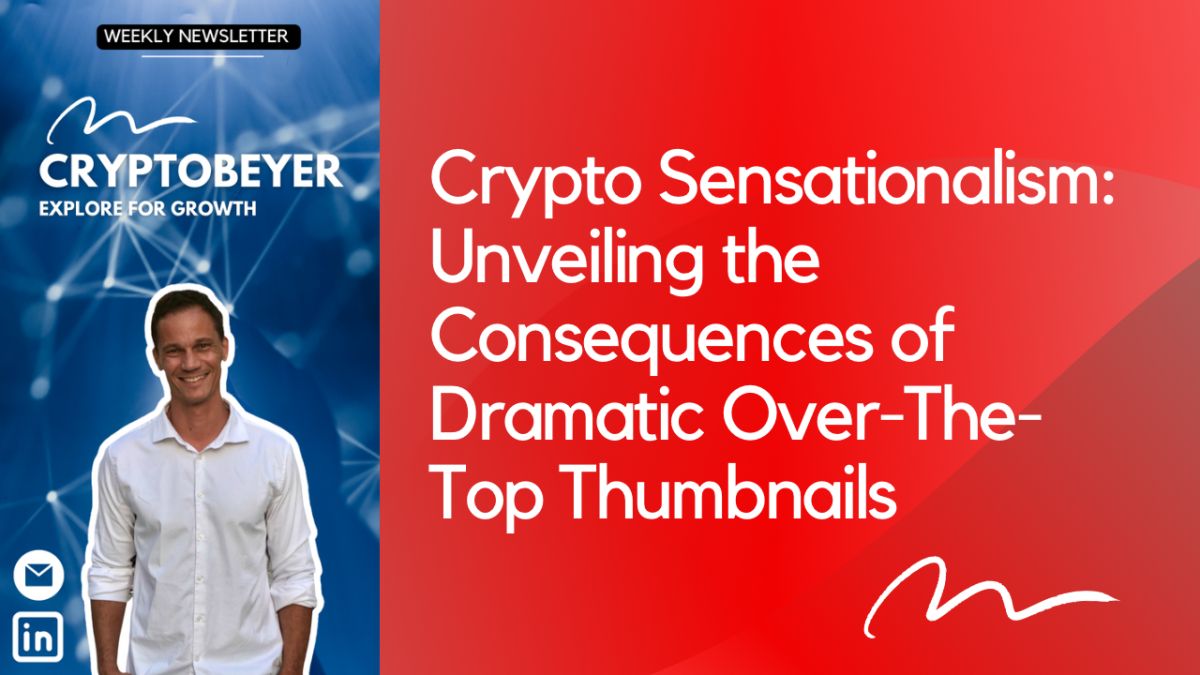
Crypto Sensationalism: Unveiling the Consequences of Dramatic Over-The-Top Thumbnails

Yes, I am sick of it! The tiresome level of dramatic over-the-top thumbnails is hurting the industry. Let’s take a serious look at what it does to the industry. Sensationalism in the crypto space carries real risks that demand cautious examination.

Picture an image of a guy whose face seem to be in shock. His mouth must be open. Sprinkle some dramatic words on the thumbnail and the newcomer to the space might think it’s the end of the world and feels inclined to read. Yes, dramatic thumbnails seem to work, but when does it not anymore? I would say right about now!

Misleading information propagated by dramatic thumbnails and clickbait headlines misguides investors, leading them to make impulsive decisions based on exaggerated or false content. As a result, their investment strategies may suffer, with potential gains eluding them or, worse, falling prey to significant losses.

Heightened volatility within the crypto market is another outcome of sensationalism. Exaggerated market sentiment spurred by dramatic content can amplify price swings, contributing to an already inherently unstable environment for investors. This is not a serious side of the space. No wonder outsiders regard the space as immature.  

Furthermore, sensationalized thumbnails erode the credibility and trust of content creators. When users encounter frequent hyperbolic visuals and headlines, they may grow skeptical of the authenticity and reliability of such sources, limiting their access to valuable insights. Seriously, just stop!

The consequences of sensationalism extend beyond credibility issues. In the worst-case scenario, it can facilitate market manipulation, such as pump-and-dump schemes, where orchestrated hype artificially inflates cryptocurrency values, only to leave unsuspecting investors facing substantial losses.   

Moreover, sensationalized content may inadvertently lead people to fall prey to scams and fraudulent schemes. The allure of extraordinary claims may entice individuals lacking a comprehensive understanding of the crypto space to invest in dubious ventures. Meme coins (that have no use case) thrive on sensationalism.

This is where I am getting angry. Frankly, if you zoom out and look at all the BS “cry the wolf” content it’s very difficult to know what is credible and what’s a parallel realm known as the “alternative side”. The alternative side of the crypto space is a realm inhabited by a myriad of beliefs, some of which border on the outlandish. From wild claims of government surveillance and control to whispers of secret societies manipulating prices, conspiracy theories blossom in this space. No Bitcoin is not going to 1 million in 90 days and the government is not always evil! It is essential to acknowledge that these theories can spread rapidly through social media, online forums, and chat groups, leading many investors astray.

I digress. My thumbnails will remain levelheaded and informative. I am committed to inform and raise awareness and I urge my readers to remain vigilant, apply critical thinking, and seek reliable information as you navigate the world of cryptocurrencies. I have a message to content creators in the space. Let’s work together to foster a more mature informed, responsible, and stable crypto ecosystem. We can still have fun!


Categories
Business & Society

Attracting Millennials & Gen Z Customers with Crypto Payments

Attracting and retaining customers has become more challenging than ever before. As businesses strive to stay ahead of the competition, cryptocurrencies have emerged as a powerful tool for tapping into new millennials and Gen Z customers. Let me tell you how!

One of the key drivers behind the attractiveness of crypto payments lies in their appeal to tech-savvy individuals. Cryptocurrencies have attracted a community of early adopters who are comfortable with cutting-edge technology and eager to explore new possibilities.

Overall, millennials and Gen Z are driving significant changes in various markets as these generations are more tech-savvy, socially responsible, and focused on career growth and development than previous generations. As these generations continue to grow in economic power, businesses will need to adapt their marketing and product strategies to meet their needs and preferences.

Millennials and Gen Z Engagement: Younger generations, such as millennials and Gen Z, are particularly drawn to cryptocurrency due to its digital nature and alignment with their tech-driven lifestyles. 

Millennials and Gen Z stand out in the way they consume and what they identify with. Therefore the company image is important. 

I took a look at Morning Consults Report 2022. It concludes that the biggest brands for millennials and Gen Z in different types of businesses can be summarized as follows:

1. Social Media Brands: YouTube, TikTok, Snapchat, Facebook, Instagram, Pinterest, and Twitter are popular among both millennials and Gen Z. However, TikTok has a more favorable opinion among Gen Z women compared to Gen Z men.

2. Gaming Brands: Discord and Twitch stand out as popular brands among Gen Z, specifically in the gaming industry.

3. Tech Brands: YouTube, Google, and Amazon are popular brands among both millennials and Gen Z.

4. Retail Brands: Major retailers like Amazon, Walmart, and Target have high favorability ratings among Gen Z.

5. Food & Beverage Brands: M&M’s is the highest-ranking brand among Gen Z, and food & beverage brands make up half of Gen Z’s top 40 brands.

Considering that all these businesses are in some way connected to blockchain technology and the crypto industry underlines that they know their customers. 

It is known that Google has filed patents related to blockchain technology and has invested in blockchain startups through its venture capital arm, GV. Snapchat has previously allowed users to buy and sell Bitcoin through its app. 

The gaming industry is using blockchain technology and crypto currencies to create games in web3. Facebook has filed patents related to blockchain technology and has explored the use of blockchain for various applications, such as digital identity verification. Twitter has allowed users to add Bitcoin and Ethereum addresses to their profiles, and has explored the use of cryptocurrencies for tipping content creators on its platform. 

Furthermore, the word on the crypto street is that Amazon is working on providing a platform for users to access cryptocurrency-related services.

What’s more? Crypto users typically belong to a demographic with disposable income, affording them the ability to spend on luxury goods and services. By accepting cryptocurrencies, businesses have the opportunity to cater to this affluent segment, offering products and services that align with their interests and lifestyles. 

It’s clear to me. By adopting crypto payments and the latest tech, businesses can connect with millennials and Gen Z on a deeper level, fostering customer loyalty and brand advocacy.

…the biggest brands for Millennials and Gen Z customers are basically screaming:

“HEY EVERYONE, LISTEN UP! EMBRACING CRYPTO PAYMENTS IS THE KEY TO BUILDING TRUST AND CREDIBILITY FOR YOUR BUSINESS! CUSTOMERS WHO KNOW CRYPTOS WILL TRUST YOU MORE, AND THAT MEANS LONG-TERM LOYALTY AND AWESOME WORD-OF-MOUTH RECOMMENDATIONS!”

Categories
Business & Society

A New Chapter for Crypto

We have turned the page. It’s a new chapter in the cryptoverse. The Securities and Exchange Commission (SEC) in the US has received a ruling from a judge regarding the famous Ripple case, which lasted over two years. Monumental.

Let me summarize what has happened in six steps:

1. In 2020, the SEC claimed Ripple raised over $1 billion through the unregistered sale of XRP as a security.

2. Ripple argued that XRP shouldn’t be considered a security, referencing comments from an SEC director.

3. The lawsuit caused XRP’s price to remain low during the recent cryptocurrency bull market.

4. In December 2020, the SEC accused Ripple of illegitimately raising $1.3 billion through XRP sales.

5. In May 2023, the court sided with Ripple, stating the SEC failed to provide adequate notice that XRP sales were securities transactions.

6. On July 13, 2023, the court ruled in favor of Ripple, stating that XRP is not a security. It also criticized the SEC for its lack of clarity on cryptocurrency regulation.

“Monumental, remarkable, a historical financial turning point!”

The crypto space is celebrating, and there is serious FOMO in the market. The price of XRP jumped dramatically, and other altcoins like ADA and SOL also experienced significant gains because they now have a better understanding of how the SEC will label their coins. There is speculation that if XRP is not considered a security, then neither are other altcoins. The main reason behind this is that XRP is highly centralized, while most coins aim for decentralization. But let’s not delve into technicalities.

This is truly a turning point for cryptocurrencies. Having followed the case from the beginning, I understand how much it has impacted the industry. The case caused a slowdown in crypto innovation in the US, leading companies to move away from the country. A sigh of relief can be heard in the US and around the world.

So, what does this mean for you?

I can’t speak for everyone, but I have invested time, money, and my reputation in this revolutionary technology. This turn of events confirms my belief in the strength of the fourth industrial revolution, with crypto being a key ingredient for society. Furthermore, things have changed compared to a few years ago. Cryptocurrencies have evolved, becoming both liquid and useful for society. In 2017, they were mere ideas with limited technology, but now they have proven their ability to withstand the challenges of adoption.

Categories
Business & Society

Rookie Mistake Alert and the Wisdom of Crypto Experts

The analogy that investing in Bitcoin is like riding a rollercoaster is appropriate. The value of Bitcoin goes through cycles of ups and downs, and parts of the ride will be scary. Really, there is no sure thing in investing, and crypto is a high-risk asset. I am not giving investment advice, only informing what the general talk is in the crypto space and learning from long-term investors. Therefore, I took a look at the biggest mistake that first-timers do when they invest in Bitcoin.

It seems that we need a strong stomach to handle the Bitcoin ride. The problem is that many new Bitcoin investors buy when the price is high and sell when the price is low.

It’s crucial to survive the first bear market!

The Bitcoin 4-year cycle is like a rollercoaster ride for the cryptocurrency. Every four years, something called the “halving” takes place. It’s when the number of new Bitcoins created gets cut in half. This scarcity of new coins tends to make the price of Bitcoin shoot up. So, you’ll see periods where the price skyrockets, and everyone gets excited. But after that, there’s usually a big drop or a bear market. It’s like a wild ride with ups and downs. By understanding this cycle, you can get an idea of what might happen next in the Bitcoin market and make smarter investment choices.

Experiencing a Bitcoin bear market for the first time can be daunting. This means that prices can drop significantly. Imagine you bought bitcoin when it was expensive, and then it dropped in value by over 75%. It can be scary! I have seen many people sell Bitcoin at a loss during times like this. In fact, Bitcoin data shows this.

Buy high:

Let’s focus on a group of investors called long-term holders (LTH). It is the people who hold bitcoin for the long term. But guess what? Even these experienced holders started somewhere. First, they can make mistakes and buy when Bitcoin is high. They learn from those experiences and become smarter investors over time. I would like you to be one of those smarter investors.

Sell cheap:

Now let’s talk about when people sell Bitcoin. When the price drops, investors may panic and sell bitcoin for even less than the price they bought it for. It’s like selling at a loss. This can happen if the price drops more than 50% of its value. Not a good situation.

Immediate Surrender:

Alert! Data suggest that we are in this period of time at the moment. We are likely roughly at the bottom of the rollercoaster and have started to go up. But beginners are shaken by the ride down. During this difficult time, when many investors are stressed and sell their bitcoin. Data shows that we have noticed a pattern. There are certain moments when new investors unfamiliar with Bitcoin sell the coin in large numbers. It’s like following the crowd and making the same mistakes.

Long-term learning curve:

It turns out that investing in Bitcoin takes time and experience. Remember: Novice investors often buy when Bitcoin is high and eventually sell when it is low. What to look for? There are signs you can look for to understand when these errors occur. For example, if you see a lot of people selling Bitcoin at a loss and the price is dropping further, it’s a sign that many novice investors are panicking.

If this is your first bear market, the statistics show that we need to be patient and strong and resist the urge to follow the masses.

Categories
Business & Society

From Tough Stance to Open Arms: UK & Europe Welcomes Crypto

Those of you that are new to crypto should know that the industry has been hurting for lack of regulation for many years. I know! Regulation sounds boring. But it’s needed before the public will accept crypto as a viable asset. Today, I come with good news for Europe.

While countries like Dubai and Singapore have been competing to attract crypto firms, the U.S. has taken a tough stance with increased enforcement actions against cryptocurrency companies. 

Britain wants to become the go-to destination for crypto firms! Prime Minister Rishi Sunak, formerly the U.K.’s finance minister, boldly declared his ambition to make Britain a “global hub for cryptoasset technology.”

And the latest exciting news is kind of funny considering that the general public does not embrace crypto yet. King Charles has given the green light to a bill that empowers regulators to oversee cryptocurrencies and stablecoins in the U.K. This bill, known as the Financial Services and Markets Act, has gone through the final stage and received royal assent, officially becoming law.

The aim of this legislation is to effectively regulate crypto and stablecoins, ensuring their safe adoption within the country. It gives regulators more authority over the financial system, treating all crypto activities as regulated and keeping a close eye on crypto promotions. Payment rules will also apply to stablecoins.

Who’s in charge of enforcing these new regulations? The Treasury, Financial Conduct Authority, Bank of England, and Payments Systems Regulator will soon have the power to introduce and enforce rules in the crypto sector. The U.K. government has been actively consulting on proposed rules since February, with the goal of establishing the nation as a thriving crypto hub.

Remember that the European Union has also made strides in the regulatory landscape. On May 31, they signed the Markets in Crypto-Assets (MiCA) regulations into law. This significant step ensures consistent regulations across all 27 EU member states, allowing approved firms to expand their business with minimal additional paperwork. 

Things are surely picking up for crypto in the European region.

Those of you that are new to crypto should know that the industry has been hurting for lack of regulation for many years. I know! Regulation sounds boring. But it’s needed before the public will accept crypto as a viable asset. Today, I come with good news for Europe.

While countries like Dubai and Singapore have been competing to attract crypto firms, the U.S. has taken a tough stance with increased enforcement actions against cryptocurrency companies. 

Britain wants to become the go-to destination for crypto firms! Prime Minister Rishi Sunak, formerly the U.K.’s finance minister, boldly declared his ambition to make Britain a “global hub for cryptoasset technology.”

And the latest exciting news is kind of funny considering that the general public does not embrace crypto yet. King Charles has given the green light to a bill that empowers regulators to oversee cryptocurrencies and stablecoins in the U.K. This bill, known as the Financial Services and Markets Act, has gone through the final stage and received royal assent, officially becoming law.

The aim of this legislation is to effectively regulate crypto and stablecoins, ensuring their safe adoption within the country. It gives regulators more authority over the financial system, treating all crypto activities as regulated and keeping a close eye on crypto promotions. Payment rules will also apply to stablecoins.

Who’s in charge of enforcing these new regulations? The Treasury, Financial Conduct Authority, Bank of England, and Payments Systems Regulator will soon have the power to introduce and enforce rules in the crypto sector. The U.K. government has been actively consulting on proposed rules since February, with the goal of establishing the nation as a thriving crypto hub.

Remember that the European Union has also made strides in the regulatory landscape. On May 31, they signed the Markets in Crypto-Assets (MiCA) regulations into law. This significant step ensures consistent regulations across all 27 EU member states, allowing approved firms to expand their business with minimal additional paperwork. 

Things are surely picking up for crypto in the European region.

Categories
Business & Society

US Stifling Innovation? China Seizing Crypto Opportunities

The USA is the biggest crypto market with 46 million crypto holders, but unclear rules and regulations are causing crypto investors and companies to leave the country. Meanwhile, China is opening its doors. Crypto! Welcome to China!

 Frankly, the US needs to get its sh.. together before it has created a truly unfriendly environment for innovation. The traditional finance sector and the government are both successful and unsuccessful in trying to crush crypto. Crypto regulation is still being affected by guiding principles that were created in the 1940s… and the first major blockchain Bitcoin was invented in 2009. How stupid is that? No wonder the regulatory crypto environment is a complete mess in the US. Meanwhile, arch-nemesis China, who loves money, has seen an opportunity.

 But China has not always had a passionate romance with crypto. In late 2001, China’s central bank declared all cryptocurrency-related transactions as illegal, which was the strongest move against the digital asset industry thus far. But China has banned cryptocurrencies at least 7 times…

 After considerable political struggles with mainland China, Hong Kong needed to build a business-friendly environment and has opened its doors to crypto trading. In fact, Hong Kong’s treasury chief says that they need crypto regulation, but he insists that crypto is here to stay. He is basically saying “game on” for crypto, and Hong Kong is creating a global hub for crypto.

 It is not yet clear which cryptocurrencies will be available for retail customers on exchanges, but rumors in the crypto community say Bitcoin, Ethereum, Litecoin, Solana, Cardano, and Polygon are likely cryptocurrencies. Is Hong-Kong based crypto exchanges the first step to mainland China?

 Yes, this is bullish news for the crypto industry, but it will take some time for Hong Kong-based exchanges to get approval to open up. Therefore, a “boom-to-the-moon” scenario is not likely in the short term. But Hong Kong adds to a future bull run!

 It’s strange, Chinese policymakers have embraced blockchain as a game-changer, with President Xi Jinping declaring it a cornerstone of future innovation and industrial transformation. Whereas the US president has called for an “unprecedented focus of coordinated action” from federal agencies in mitigating illicit finance and national security risks posed by cryptocurrencies. Regulate through enforcement is the hallmark of US regulatory bodies. This is stupid! Did you know, according to Chainalysis, illicit addresses made up only 0.24 percent of the total cryptocurrency transaction volume in 2022. Say no more…

 Yes, the US is ranked nr:5 in the 2022 Global Crypto Adoption Index and has come further than China which is ranked as nr:10. Western countries would like to think that the US has a brighter crypto future despite the current unclear regulations. I believe so too. I fear the future of a digital China which has complete control of its citizems financial life through a programable coin. The digital yuan is here and should be feared. 

 But US regulatory bodies need to focus more on the possibilities of blockchain technology. As well as to create a business friendly landscape. Not mostly on the 0.24 percent of the crypto volume which is bad. Let’s be smart, instead.

Categories
Business & Society

Empowering Individuals and Breaking the Stranglehold of Traditional Institutions

As we deposit our hard-earned money into a bank, we trust that it will be safe and secure. But what if I told you that the stability of your bank account is subject to various risks and uncertainties, such as bank failures, government policies, and economic conditions? The fact is, while we technically own the money in our bank account, the security of it is not fully in our control. In short, in the traditional system we need to trust people.

Enter decentralization, the solution to this problem. Decentralization distributes power among participants, creating a more democratic system that is less prone to corruption and abuse. The crypto community, filled with individuals who believe in financial freedom, transparency, and decentralization, is striving towards this goal through decentralized finance (DeFi).

In the traditional financial system, banks and other institutions hold onto your money and make decisions about how it’s used. But in DeFi, the power is in your hands.

One way to make money in DeFi is through yield farming. Yield farming is when you lend out your digital assets, like cryptocurrencies, and earn interest on them. The interest rates in DeFi are usually higher than traditional savings accounts, so it can be a good way to grow your wealth.

Another way to make money in DeFi is through trading. Just like stocks, the value of cryptocurrencies can go up and down. By buying low and selling high, you can make a profit. In DeFi, you can trade a wide variety of cryptocurrencies.

Finally, you can also earn money in DeFi by providing liquidity to decentralized exchanges. When you provide liquidity, you’re helping to make sure that trades can happen smoothly and quickly. In exchange, you can earn fees on every trade that’s made.

Most DeFi protocols are run by automated smart contracts and decentralized autonomous organizations (DAOs), and do not require heavy Know Your Customer (KYC) requirements, allowing traders to maintain their anonymity.

KYC is the process of verifying a client’s identity in financial transactions, and while it is important for preventing illegal activities, heavy KYC requirements can also limit financial freedom and accessibility.

The ability to trade and invest anonymously is a core tenet of decentralization, and excessive KYC requirements can be seen as a violation of personal privacy and freedom. Soon my bank will ask who my mistress is and for the size of my shoes before I can make a transaction… Additionally, collecting and verifying personal information can be difficult and expensive, leading to a concentration of power in larger financial institutions and hindering competition and innovation. At what point does banks have too much power?

In conclusion, finding the right balance between ensuring the safety of the financial system and preserving the freedom and privacy of individuals is crucial for the continued growth and success of the crypto and DeFi communities. Decentralized finance is paving the way for a more inclusive, accessible, and democratic financial system that puts the power back in the hands of you and me.

I know it’s feels early. But if you are tired of your bank and if you’re seeking financial freedom and control over your assets, I would look at DeFi.

Categories
Business & Society

Crypto and the Fourth Industrial Revolution: What to Expect

I’ve been watching the growth and development of cryptocurrencies, and it’s truly been awe-inspiring to witness its rapid evolution. However, the crypto world, like any technological shift, is far from perfect and has to numerous challenges to overcome.

For example, the Bitcoin network is often struggling with scalability issues, resulting in slow confirmation times and high fees during periods of great network demand. Additionally, the crypto space is vulnerable to bad actors who take advantage of weaknesses for their own financial gain. In 2022, North Korean-linked hackers made off with $3.8 billion in crypto, while two nerds created a Ponzi-scheme and defrauded investors and laughed all the way to the bank.

For crypto currencies to reach their full potential and be widely adopted, they need a robust infrastructure to support them. This includes secure and reliable exchanges, user-friendly and safe wallets, and efficient payment systems. Clear regulations are clearly necessary to protect customers and prevent illegal activities.

I understand that the crypto space can be confusing and intimidating for many people, but it’s crucial that we educate ourselves about the benefits and potential of crypto currencies. By being proactive and taking measures to prevent problems, we can be more efficient and less prone to making costly mistakes.

The crypto world is still in its early stages of development, and there are many challenges and risks that need to be addressed. However, with proper security measures and regulations in place, the potential for crypto currencies to transform the financial landscape is enormous. Investors should be proactive and well-informed when making investment decisions in this space and prioritize the protection of their assets.

There are also societal consequences of disrupting technologies that are important to consider.

For example, the fourth industrial revolution, with its focus on automation, artificial intelligence, and blockchain technology, will likely result in changes to the job market. While it’s impossible to predict the extent of these changes, it’s crucial for workers to be proactive and prepare for a rapidly evolving job market.

In conclusion, the crypto revolution presents both challenges and opportunities. However, I think we need the shitstorm of difficulties before we can expect to have a solid product. Remember, crypto currencies are not a final product and hundreds and thousands of developers are working on each blockchain. The blockchain business is a process affected by the vision of the coin, laws, regulation, crime, customer needs and dreams of profit. I consider it a space to learn from.

Categories
Business & Society

Maximizing Returns in the Crypto World: A Guide to Navigating Volatility, Risk, and Opportunity

Old-timers in the crypto space will tell you that they love the volatility. Brutal dips, trips to the moon, and crypto winters offer opportunities, but they are not for the faint of heart. The volatility in the price of cryptocurrencies makes it a great trading asset, but be warned – the word in the crypto community is that 90% of traders are unsuccessful.

I avoid trading and instead believe in the long-term potential of cryptocurrencies. Over time, I’ve learned vital lessons about investing in crypto. The volatility is both a blessing and a curse, providing opportunities for traders but also being nerve-wracking for those not comfortable with risk. A long-term perspective on owning crypto requires the ability to tolerate dramatic price swings.

Many in the crypto community believe that the price of Bitcoin follows a four-year cycle, as history has shown repeatedly. It’s debatable whether we’re in a bear market right now. If Bitcoin has hit bottom, then we are in the early stages of a bull market. However, some might refer to this phase as an accumulation phase, as prices are expected to rise slowly for almost a year. The next major uptrend is predicted for mid-2024, but history may not repeat itself. To increase your market stamina, I suggest taking a long-term view and not tracking market prices daily. Holding crypto costs nothing, and some coins even offer interest through staking rewards. 

Staying informed about news and events in the crypto world is also valuable, keeping an eye out for regulatory changes, investor sentiment, and technological developments that could impact your investment.

However, it’s important to remember that crypto is risky. But it has taught me to consider and value my retirement. Some say the crypto boom is a once-in-a-lifetime chance to change our financial future, and that’s the key word – future. Crypto is a lesson in valuing your future self, hopefully.

Categories
Business & Society

4 Industries that Must Use Blockchain Technology – or Suffer the Consequences

Where blockchain technology is most disruptive is the industry that can benefit the most by this emerging technology. The global financial services sector is worth approximately 20-25% of the world economy and traditional financial businesses are winners when they are using blockchain technology. This technology which is a key component of the fourth industrial revolution can facilitate cross-border payments and an entire decentralized, bank free, financial system is being built. But even the biggest traditional banks regard blockchain technology to be a key component to improve their business.

The enormous global supply chain management industry (worth USD 16.64 billion in 2021) will blossom by using blockchain technology. Blockchain technology can improve the transparency and security of the transportation process and increase efficiency of services. In fact, the entire production process including details about the product and its delivery can be tracked, traced, and validated by a blockchain. This technology ensures that data is not tampered with which increase trustworthiness of the goods and of the cargo company.

A clear winner by using blockchain technology is the medical sector that can use blockchain technology to create secure systems for storing and sharing medical records. To improve public health, medical establishments and governments should seriously consider using blockchain technology to improve the efficiency of healthcare delivery. Any medical staff would argue that one system for the entire medical sector will increase efficiency of treatment and decrease administrational costs. 

Moreover, governments and authorities are using blockchain technology to store and verify digital identification information and to deliver a digital monetary system. This is the biggest area in which blockchain technology may be a severe cause of concern as digital identifications and digital money may infringe on privacy if not properly constructed and managed. But using blockchain technology for digital identification and e-money will be inevitable components of the future and doing it right will be crucial.

Businesses that do not embrace blockchain technology will suffer from less effective, more costly, and less secure services. Traditional cargo companies will be less effective and therefore lose market share to competitors who are evolving and up to date with technology. Public health will suffer due to ineffective healthcare, and problems of lack of financial inclusion will continue. Moving away from paper fiat money and into e-money is a must to function in modern society and blockchain technology is the solution. Businesses will go bust for not following the trend of digitalization of society.

The digital future is already here and only the tech-savvy actor will enjoy the fruits of keeping up with the fourth industrial revolution.